Rare Double Header: Total Solar Eclipse Coincides with Perseid Meteor Shower Peak
On August 12, skywatchers across the Northern Hemisphere will be treated to a rare astronomical double feature. The only total solar eclipse of 2026 will take place on the same day that the famous Perseid meteor shower reaches its annual peak, with a new Moon providing exceptionally dark skies for viewing the meteors
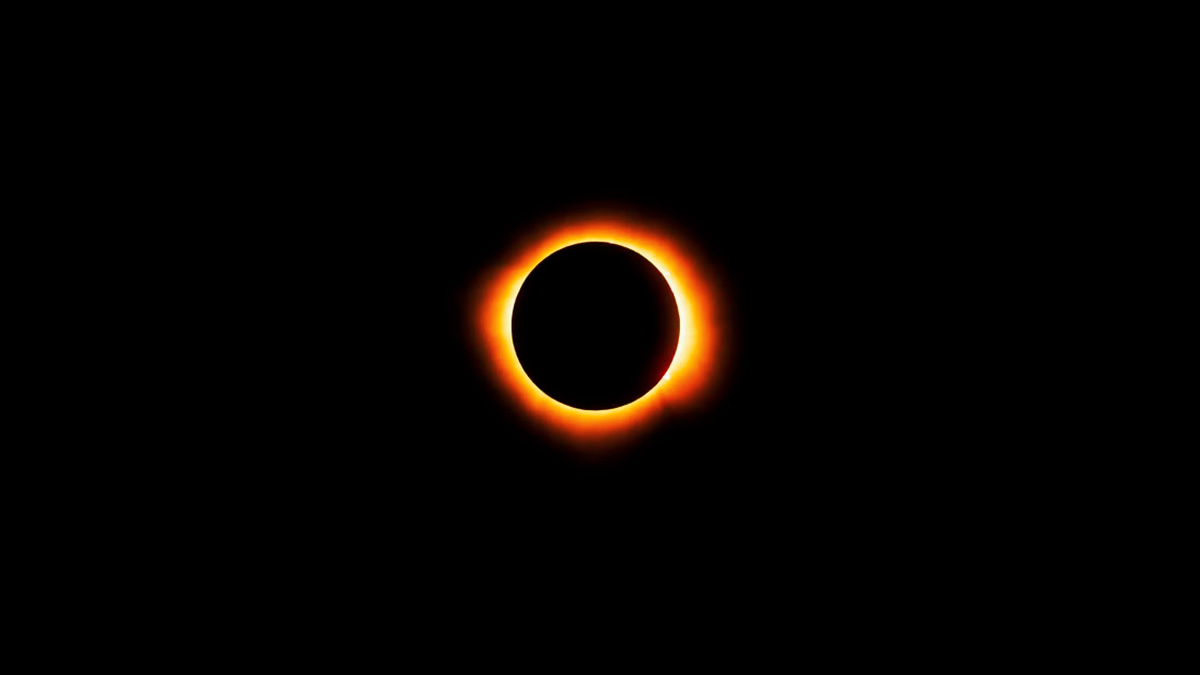
Image related to Rare Double Header: Total Solar Eclipse Coincides with Perseid Meteor Shower Peak. (Photo: Metro Daily Reporter)
Table of Contents
On August 12, skywatchers across the Northern Hemisphere will be treated to a rare astronomical double feature. The only total solar eclipse of 2026 will take place on the same day that the famous Perseid meteor shower reaches its annual peak, with a new Moon providing exceptionally dark skies for viewing the meteors .
The Eclipse: Where and When to See It
The total solar eclipse will trace a path across some of the most northerly and westerly parts of the globe. Totality begins at sunrise in remote northern Siberia, before sweeping south over Greenland's east coast. The shadow will then pass over western Iceland, where the capital Reykjavík will experience approximately 60 seconds of totality starting at 5:48 p.m. local time .
The umbra, or dark shadow of the Moon, will then make landfall in northern Spain near the port city of A Coruña at 8:28 p.m. local time, delivering 1 minute and 15 seconds of totality. It will race across the Iberian Peninsula, passing over cities like León, Burgos, Zaragoza, and Valencia before finally disappearing into the Mediterranean Sea east of Mallorca .
-
Iceland (Reykjavík): Totality begins at 5:48 p.m. local time, lasting 60 seconds.
-
Spain (León): Totality begins at 8:28 p.m. local time, lasting 1 minute, 44 seconds.
For many locations in Spain and the Balearic Islands, this will be a striking "sunset eclipse," with the Sun in totality just a few degrees above the horizon .
The Partial Eclipse for North America
Outside the path of totality, a significant partial eclipse will be visible across a wide swath of the Northern Hemisphere. In North America, viewers in parts of the U.S. from Alaska to North Carolina, as well as most of Canada, will see the Moon take a "bite" out of the Sun .
The best views in the contiguous U.S. will be in the Northeast . In Boston, Massachusetts, the Sun will be 16% obscured; in New York City, it will be about 9% obscured; and from Washington D.C., only about 4% of the Sun will be covered . St. John's, Newfoundland and Labrador, will see a more impressive 53% obscuration .
The Perseid Meteor Shower: A Perfect Storm for Viewing
This year, the peak of the Perseid meteor shower is expected to occur on the night of August 12-13, coinciding with the eclipse. The Perseids, which produce up to 100 meteors per hour at their peak, are widely considered the best meteor shower of the year due to their bright, fast-moving "fireballs" .
The event is enhanced by the Moon, which will be a new Moon on August 12. This means the sky will be at its darkest, providing ideal conditions for viewing the fainter meteors . For those lucky enough to be in the path of totality, the brief moments of darkness could also offer a chance to spot a Perseid meteor during the day.
The Wildfire Threat in Spain
A major concern for eclipse viewers in Spain is the ongoing wildfire crisis. The country is experiencing its worst wildfire season in over three decades, with over 150,000 hectares already burned in 2026 . Two massive fires near the capital Madrid are among the largest in European history .
The fires pose a double threat to eclipse watchers. First, smoke from the blazes could severely hamper visibility of the eclipse, creating a thick haze that obscures the Sun and dims totality. "Firstly, that can affect visibility because these particles can reflect the sunlight and just create a haze and a sort of a cloud that is really hard to see through," said Becky Wagner, an air quality researcher at the University of Sheffield .
Second, poor air quality is a serious health concern. The smoke contains high levels of fine particulate matter (PM2.5), which is harmful to human health. Wagner warns the particles "can be breathed in, and it can affect people's health, particularly vulnerable populations with respiratory and cardiovascular problems" .
Solar Eclipse Safety
Proper eye protection is critical during a solar eclipse. It is never safe to look directly at the Sun without specialized filters. During a total eclipse, it is only safe to look directly at the Sun during the brief moments of totality when the Moon completely blocks the Sun's bright face. The moment the Sun begins to emerge from behind the Moon, you must put your eclipse glasses back on .
-
Eclipse Glasses: Must be from a reputable vendor and comply with the ISO 12312-2 international safety standard. Regular sunglasses are not safe .
-
Indirect Viewing: You can also safely watch a partial eclipse by using a simple pinhole projector .
A key demand for eclipse glasses ahead of this event has led to warnings about potential shortages and counterfeit products, especially in Europe where public awareness may be lower. "The August 12th eclipse in Europe is tracking toward a very predictable crisis: a big shortage of certified eclipse glasses," said Jason Lewin of American Paper Optics, a major manufacturer of eclipse glasses .

Related Articles