NASA Mars Rover Curiosity Discovers Breathtaking 'Sea of Polygons' on the Red Planet
NASA's Curiosity rover has stumbled upon a remarkable geological discovery while climbing a Martian valley nicknamed "Valle Grande": a vast field of honeycomb-like polygonal shapes stretching across the landscape. The discovery, captured in a 360-degree panorama, represents the largest concentration of these "polygonal fractures" the mission has ever observed, leaving scientists both awestruck and eager to decipher their origin.
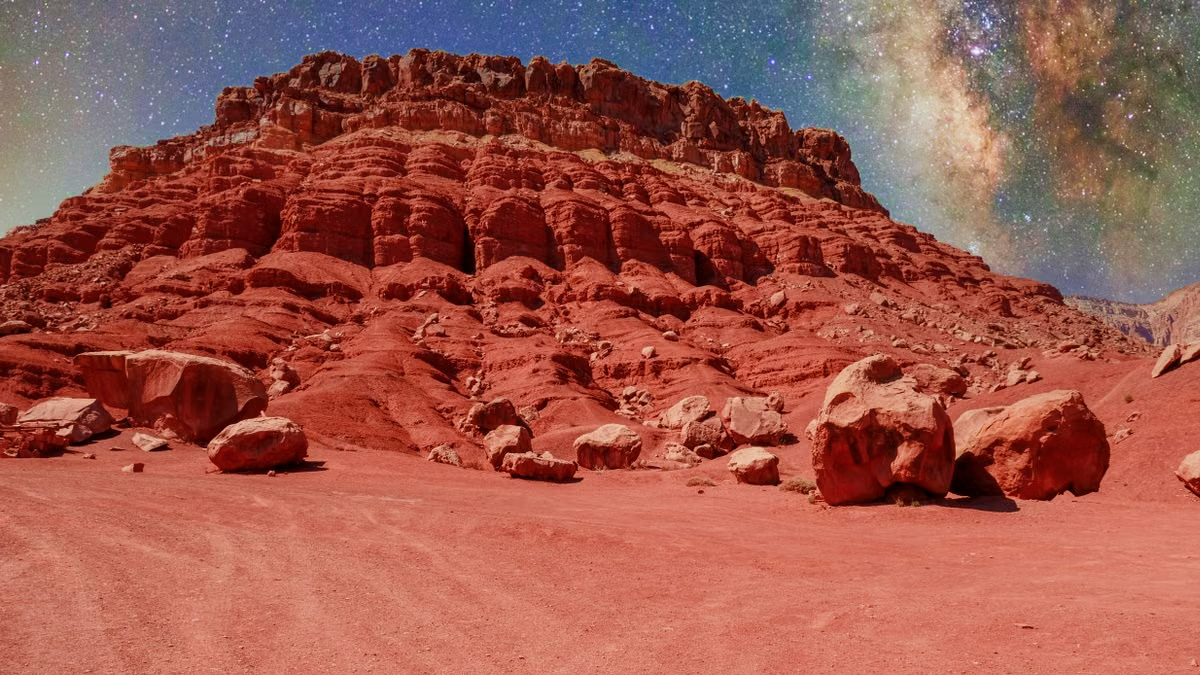
Image related to NASA Mars Rover Curiosity Discovers Breathtaking 'Sea of Polygons' on the Red Planet. (Photo: Metro Daily Reporter)
Table of Contents
NASA's Curiosity rover has stumbled upon a remarkable geological discovery while climbing a Martian valley nicknamed "Valle Grande": a vast field of honeycomb-like polygonal shapes stretching across the landscape. The discovery, captured in a 360-degree panorama, represents the largest concentration of these "polygonal fractures" the mission has ever observed, leaving scientists both awestruck and eager to decipher their origin.
The Discovery: A "Sea of Polygons"
The rover, which has been exploring the Gale Crater and ascending the 3-mile-tall Mount Sharp since 2014, made the discovery on June 19 and 20, 2026 (Martian sols 4,930 and 4,931). While the mission has previously spotted small patches of these geometric shapes, the scale of the new find in Valle Grande is unprecedented . The honeycomb-like terrain, with individual polygons measuring between 1.5 and 3 inches (4 to 8 centimeters) across, spreads in all directions as far as the rover's cameras can see.
"This sea of polygons took our breath away," said Ashwin Vasavada, Curiosity's project scientist at NASA's Jet Propulsion Laboratory. "We've seen a lot of fascinating landscapes through Curiosity's eyes, but nothing at this scale." The team has carefully measured the shapes and chemistry of the features, hoping the data will reveal how they formed .
What Are These Strange Features?
The polygonal fractures, which resemble honeycombs, are a type of terrain texture that can form through various geological processes. In the past, some polygons observed by Curiosity have been identified as mud cracks, indicating that the surface was once wet and then dried. However, the pattern can also emerge from cycles of extreme warm and cold temperatures, or from the compression of sediment that squeezed water out as the surface was buried deep underground .
The fact that the new polygons were found in a valley near the base of Mount Sharp, which is rich in evidence of ancient water, strongly suggests they may have been formed by the expansion and contraction of wet mud that eventually dried and cracked . This adds to the growing body of evidence that Gale Crater once contained massive, long-lived lakes billions of years ago .
The Search for Ancient Life
The discovery is a significant piece of the puzzle in understanding whether Mars could have supported microbial life. Curiosity has previously found key chemical ingredients for life, including carbon-based molecules believed to be precursors to RNA and DNA . While scientists do not know if these organic molecules were created by biological or geological processes, their presence confirms that ancient Mars had the right chemistry to support living organisms.
The "sea of polygons" provides a new window into the planet's ancient climate. The shapes suggest the landscape experienced repeated cycles of wet and dry conditions, a process that could have created an environment similar to the one where life is thought to have evolved on Earth . "The geological processes that formed these polygons tell us about the planet's past," Vasavada explained. "The evidence of mud cracking and multiple wet-dry cycles is a strong sign that the Martian environment was once quite dynamic and potentially habitable" .
A Legacy of Discovery
The Curiosity rover has been exploring Mars for over 14 years, landing on August 5, 2012. In that time, it has traversed more than 20 miles and made numerous groundbreaking discoveries. This latest find continues the rover's tradition of uncovering surprising details about the Red Planet's complex geological history and its potential to have supported life. The mission is managed by Caltech in Pasadena, and JPL built and leads the mission on behalf of NASA .

Related Articles