Iran and Oman Near Strait of Hormuz Deal as Trump Predicts War Will End 'Pretty Soon'
U.S. President Donald Trump has predicted the six-month-long war with Iran will end "pretty soon," as Iran and Oman finalize an agreement on a commercial shipping route through the Strait of Hormuz. While Iran's deputy foreign minister says a deal with Oman is close, Tehran insists the strait will not reopen unless the U.S. lifts its naval blockade and meets other commitments. Meanwhile, Saudi Arabia braces for "multiple coordinated attacks" by Iraqi militias and the Houthis, as U.S. officials p
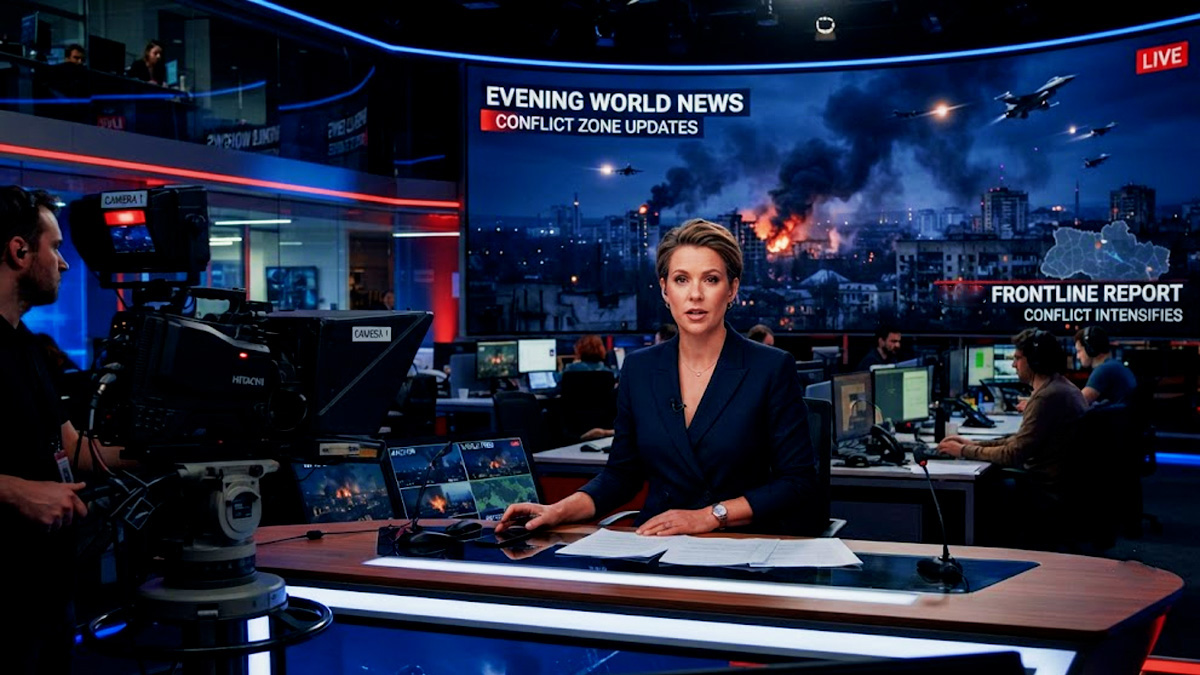
Image related to Iran and Oman Near Strait of Hormuz Deal as Trump Predicts War Will End 'Pretty Soon'. (Photo: Metro Daily Reporter)
Table of Contents
Trump says he thinks war with Iran will end 'pretty soon'
Six months after the United States and Israel launched a joint military campaign against Iran, the conflict appears to be approaching a critical inflection point. President Donald Trump said Thursday that he believes the war will end "pretty soon," expressing confidence that Tehran cannot sustain the fight much longer . His prediction comes as Iran and Oman finalize a framework for commercial shipping through the Strait of Hormuz—the vital waterway through which 20% of the world's oil transited before the war—though Iran's deputy foreign minister warned the agreement would not automatically reopen the strait . The diplomatic maneuvering unfolds against a backdrop of escalating regional tensions: Saudi Arabia is bracing for "multiple coordinated attacks" by Iraqi militias working with Iran-backed Houthi rebels, while the U.S. military faces increasingly severe munitions shortages that have reportedly constrained Trump's options for escalation .
Trump's Conflicting Signals: Optimism Amid Threats
Trump has adopted a stop-and-start rhetorical approach to the conflict, issuing severe threats against Iran before dialing them back as negotiations drag on . On Thursday, the president struck an optimistic tone, telling reporters in the Oval Office: "I think it's going to end pretty soon. I don't think they can go much longer" . He also claimed direct involvement in negotiations with Iran, saying, "I am involved in negotiations. I think things are going well. A deal could be reached soon" .
Yet Trump has simultaneously warned Tehran that failure to reach a deal would trigger overwhelming retaliation. Over the weekend, he said he canceled plans for what he described as the largest U.S. attack since World War II because Iran wanted to negotiate, but threatened to hit "really hard" if diplomacy fails . Earlier, he had threatened to target Iranian energy facilities, bridges, and power plants . This pattern of "theater diplomacy"—as Iranian parliament speaker Mohammad Bagher Ghalibaf called it—has fueled skepticism in Tehran . Ghalibaf accused Trump of using "bullying, broken promises and fake news as leverage," adding, "Acknowledge the facts and fulfill your commitments. We don't need more theater" .
The Oman-Iran Deal: A Framework for Hormuz
The emerging agreement between Iran and Oman represents the most significant diplomatic development since the war began. Iranian Foreign Ministry spokesperson Esmaeil Baghaei confirmed Wednesday that the two countries have reached an understanding on the geographical coordinates of a proposed commercial shipping route through the strait . According to Baghaei, a joint statement outlining key agreed-upon points is "in the final review and drafting stage," provided that "certain third parties" do not obstruct the process .
Under the proposed arrangement, shipping routes would change significantly, with commercial traffic transiting through Iranian territorial waters and Oman's waters . Iran's deputy foreign minister, Kazem Gharibabadi, said the deal reflects a "new strategy for exercising effective sovereignty" over the strait . Leading maritime associations have warned that introducing tolls or service fees on vessels could drive up costs for consumers and "threaten free navigation" .
However, Iranian officials have repeatedly stressed that the bilateral understanding with Oman does not, by itself, mean the strait has become safe for international shipping. Baghaei emphasized that "the factors making the Strait of Hormuz insecure still exist on the part of the United States, particularly the naval blockade and other aggressive and threatening actions against Iran and its interests" . Gharibabadi spelled out Iran's conditions for a full reopening, including an end to the U.S. naval blockade, resumption of negotiations over frozen assets, and addressing what Tehran calls the U.S. "failure" to ensure stability in Lebanon .
Iran has also signaled it will not revert to the strait's pre-war status as an open international waterway. A bill currently under review by Iran's parliament would ban ships from the U.S., Israel, and other "hostile" countries from the waterway, imposing fines of up to 20% of cargo value for violations . This development has alarmed U.S. officials, with Secretary of State Marco Rubio repeatedly insisting that "any form of state control over international waters is against international law" . However, analysts note that Trump has previously contradicted Rubio's assertions and could accept an arrangement that effectively cedes control to Iran .
Saudi Arabia Bracing for Attacks
The diplomatic push comes as the conflict threatens to expand significantly. A Saudi official told CNN that the kingdom is bracing for "multiple coordinated attacks" by Iraqi militias working with Iran-backed Houthi rebels, based on "multiple intelligence reports" indicating an attack is imminent under the guidance of Iran's Islamic Revolutionary Guard Corps (IRGC) . The official expressed alarm that such attacks are being planned precisely as Saudi Arabia encourages de-escalation and negotiations appear to be heading in the right direction .
Earlier Thursday, Yemen's Houthi group claimed to have carried out a "large-scale" military operation targeting Saudi troops with ballistic missiles and drones in several areas of the country . The group also claimed attacks on two Saudi oil tankers—the Wafa in the northern Red Sea and the Daisy in the Gulf of Aden—part of an escalating maritime campaign against Saudi-linked shipping . According to Houthi military spokesperson Yahya Sarea, the attacks bring the number of Saudi oil tankers targeted since the blockade began to nine, while 29 others have been forced to turn back .
These Houthi operations are part of a "blockade-for-blockade" policy responding to what the group calls a Saudi blockade on Houthi-controlled areas of Yemen . The Yemeni conflict, which has been ongoing since 2014, has now become deeply entangled with the broader U.S.-Iran war, with the Houthis acting as Iran's proxy in the Red Sea . The group's pressure on Saudi shipping from the south compounds Iran's chokehold on the Strait of Hormuz in the north, threatening to cut off Saudi Arabia's ability to export oil from both directions .
U.S. Munitions Shortages: A Constraint on Escalation
The military dimension of the conflict has been complicated by increasingly severe U.S. munitions shortages. Senior U.S. military commanders have warned that the Pentagon's stockpile is "dangerously low," according to multiple sources . CNN reported that the U.S. has exhausted nearly 80% of its interceptors for the key THAAD missile defense system, as well as approximately half of its Patriot interceptors . The U.S. has also used up "virtually all" of its Army Tactical Missile Systems (ATACMS) and Precision Strike Missiles (PrSMs), along with just under half its Tomahawk missile inventory .
According to The Washington Post, Trump confronted Defense Secretary Pete Hegseth during a Cabinet meeting at Camp David last week, demanding answers after learning that shortages of key weapons had not been resolved . The report said Hegseth defended himself and blamed Deputy Defense Secretary Stephen Feinberg for not ensuring Trump was fully informed . Both the White House and Pentagon have denied the report, with press secretary Karoline Leavitt calling it "100% fake news" .
Publicly, Trump has claimed the U.S. has "massive amounts of munitions" while acknowledging certain supplies are "tighter" . In the Oval Office on Thursday, he said: "We have certain types of munitions which are very—they may not be as accurate. They may not be, you know, they're not as elite. But we have certain types which are very powerful and very good, and we have an unlimited supply" . Privately, however, he has complained that reports of dwindling stockpiles make the U.S. appear weak in negotiations .
The shortages have reportedly been a factor in Trump's decision to hold back from launching additional large-scale strikes against Iran in recent days . General Dan Caine, the chairman of the Joint Chiefs of Staff, warned Trump that the current munitions stockpile makes any continued escalation against Iran "a dubious proposition" . Beyond the Middle East, the war has left Ukraine—which is heavily reliant on U.S. air defense missiles—facing Russian barrages without enough interceptors, and prompted observers to warn the U.S. cannot properly face China in a potential conflict .
Conclusion
As the six-month war enters a critical phase, Trump finds himself caught between unattractive options. Emerging diplomatic pathways, including the Iran-Oman Hormuz framework, would grant Iran significant concessions it never possessed before the war, effectively formalizing Tehran's control over the world's most important oil-shipping conduit . Rejecting the deal and escalating military strikes carries its own political risks, with U.S. midterm elections approaching, gasoline prices remaining high, and the war deeply unpopular with the American public . The conflict has already strained U.S. munitions stockpiles to a degree that constrains further escalation . "It's a menu of bad options," said Aaron David Miller, a former Middle East negotiator, "but Trump may have come to the realization that he can't let this war go on endlessly. Something has to give" .

Related Articles